
When Valuations Defy Fundamentals: Rational Pricing or Market Hype?

Every time a company achieves a valuation that appears disconnected from its current financial performance, the same debate emerges: has the market become irrational? Traditional valuation methodologies are built on a simple premise. Value is derived from expected future cash flows, adjusted for growth prospects and risk. When valuations move far beyond what these models suggest,

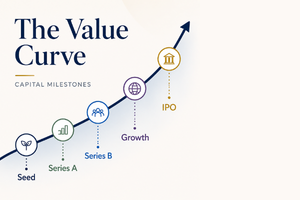
SpaceX, IPO Timing and the Value Curve: When Is the Right Time to Raise Capital?

The traditional technology company journey used to be fairly predictable: build a product, raise venture capital, scale rapidly, go public, and let public market investors participate in the next phase of growth. SpaceX challenges that model. But the point of this discussion is not whether SpaceX is correctly valued, overvalued or undervalued. That is a separate

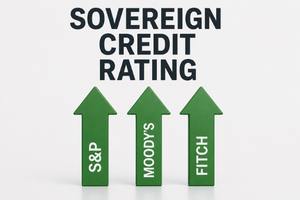
What South Africa’s Positive Credit Rating Outlook Means for Valuations

South Africa’s recent sovereign credit rating development is more than a headline for economists. Strictly speaking, Moody’s did not upgrade the rating itself last week; it affirmed South Africa at Ba2 and changed the outlook from stable to positive, citing improving fiscal performance, reform momentum, rising primary surpluses and expectations that debt pressures will ease. But

Dilution: Why Owning Less Should Mean Owning More

INTRODUCTION  Dilution is often a misunderstood concept in business ownership. Many founders instinctively resist it because it feels like a “giving away” part of the company they built. Yet some of the world’s most successful businesses became valuable precisely because their founders were willing to dilute their ownership strategically in exchange for growth, expertise, capital, or acquisition opportunities.  The

Valuing the Unknowable: Inside the SpaceX IPO

The anticipated IPO of SpaceX has captured global attention, and not without reason. Few businesses represent such a unique convergence of futuristic infrastructure, rapid commercial scaling, and strategic uncertainty. Between launch systems, global satellite networks, artificial intelligence potential, and the influence of Elon Musk, the company sits at the centre of some of the most transformative

Deal Fever – When M&A Gets Ahead of Itself

Deal Fever – When M&A Gets Ahead of Itself Every so often, a headline announces a major acquisition. A listed company is buying another for a hefty premium. The logic seems sound—market share, complementary offerings, geographic expansion. The press release is confident. The CEO sounds upbeat. Analysts weigh in. But sometimes, just sometimes, it all starts to

Plan. Assess. Win: How Smart Buyers Turn Synergies Into Value

In M&A, a single word often shapes the entire rationale for a deal: synergy. Whether it's reducing costs, increasing revenue, or unlocking potential, synergies are seen as the ideal outcome. But as anyone involved in deal-making knows, assumptions about synergies can be tempting — and risky — if not carefully evaluated. So, how can you identify

What Makes a Business Worth Acquiring? A CFO’s Cheat Sheet

Let’s say your CEO walks in and says, “We’re thinking of acquiring a business.” Cue the internal audit alarms, spreadsheets, and heart palpitations. As CFO, your job isn’t just to model the deal—it’s to sanity-check whether the target is actually worth acquiring in the first place. So, what should you look for before your executive team

Go to Top