

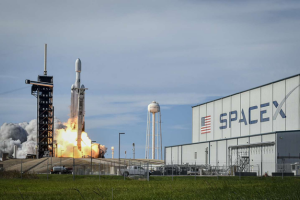
 The anticipated IPO of SpaceX has captured global attention, and not without reason. Few businesses represent such a unique convergence of futuristic infrastructure, rapid commercial scaling, and strategic uncertainty. Between launch systems, global satellite networks, artificial intelligence potential, and the influence of Elon Musk, the company sits at the centre of some of the most transformative industries of the next decade.
But beyond the spectacle lies a far more interesting valuation question: how does one value a business that may not only dominate its current market, but fundamentally reshape future ones?
At its core, SpaceX already operates several highly tangible and revenue-generating businesses. Launch services continue to scale across both government and commercial sectors, while Starlink has rapidly evolved into one of the world’s most ambitious connectivity platforms. Combined with infrastructure capabilities that remain years ahead of most competitors, these operations form a business that can still be analysed through disciplined financial modelling.
Revenues can be projected from launch cadence and subscriber growth. Margins can be stress-tested as scale improves. Capital intensity, regulatory considerations, and adoption scenarios can all be modelled to produce a fundamental valuation range grounded in cash flows, risk, and execution.
Yet the more compelling part of the valuation may lie beyond the business that exists today.
Starlink is increasingly becoming more than a connectivity product. It has the potential to evolve into a global data backbone, one that could eventually integrate with proprietary AI systems, space-based infrastructure, and broader digital ecosystems. What begins to emerge is the possibility of a vertically integrated and highly defensible platform, where SpaceX is not merely participating in the AI economy, but enabling significant portions of it.
This is where traditional valuation methodologies begin to stretch. The exercise shifts from forecasting financial performance to assigning probabilities to strategic outcomes, particularly outcomes wherecompetitors may struggle to replicate the same infrastructure advantages.
A practical approach in situations like this is to separate fundamentals from future optionality.
The first step is to value the existing business independently: launch services, Starlink operations, and infrastructure expansion based on realistic operational assumptions. The second is to compare that valuation to expected IPO pricing. The difference between the two becomes the premium the market is willing to pay for future dominance, strategic positioning, and long-term ecosystem control.
That premium is ultimately tied to belief:
- Belief in the scale of the future AI-driven economy
- Belief in the strategic value of owning global infrastructure
- Belief that SpaceX could become a gatekeeper rather than simply another competitor
This introduces a provocative idea: are investors effectively valuing the future AI market first, and then working backwards to justify SpaceX’s share of it?
If so, valuation becomes less about what the business currently earns, and more about how much of a future ecosystem it may eventually control — and how defensible that control becomes over time.
Even within this uncertainty, financial modelling remains essential. Not because it provides certainty, but because it provides structure. By deconstructing businesses into their underlying economic drivers, building multiple scenarios, and stress-testing assumptions across different futures, valuation becomes a process of making uncertainty explicit rather than ignoring it.
The result is rarely a single “correct” number. Instead, it becomes a defensible range paired with a transparent understanding of what must go right to justify it.
The SpaceX IPO is therefore more than a market event. It is a case study in how valuation evolves when businesses begin shaping the future rather than simply operating within the present. One part of the valuation will always belong to fundamentals. The other belongs to belief — belief in technology, infrastructure, dominance, and the structure of markets that have not yet fully formed.
The key is not choosing between the two, but separating them clearly enough to answer the question that ultimately matters:
Is the premium justified, or is the future already fully priced in?